
Block walls are what the plaster, paint, tiles and windows sit on. A wall that is out of line, badly tied to the columns or weak over a wide opening shows up long after handover. This page sets out how Falcon builds a villa’s block walls, and what to check when you compare contractors.
Which blocks we use
We use concrete blocks or volcanic blocks, depending on the drawings and the project’s requirements. That said, our preference is volcanic blocks. We also insulate external walls.
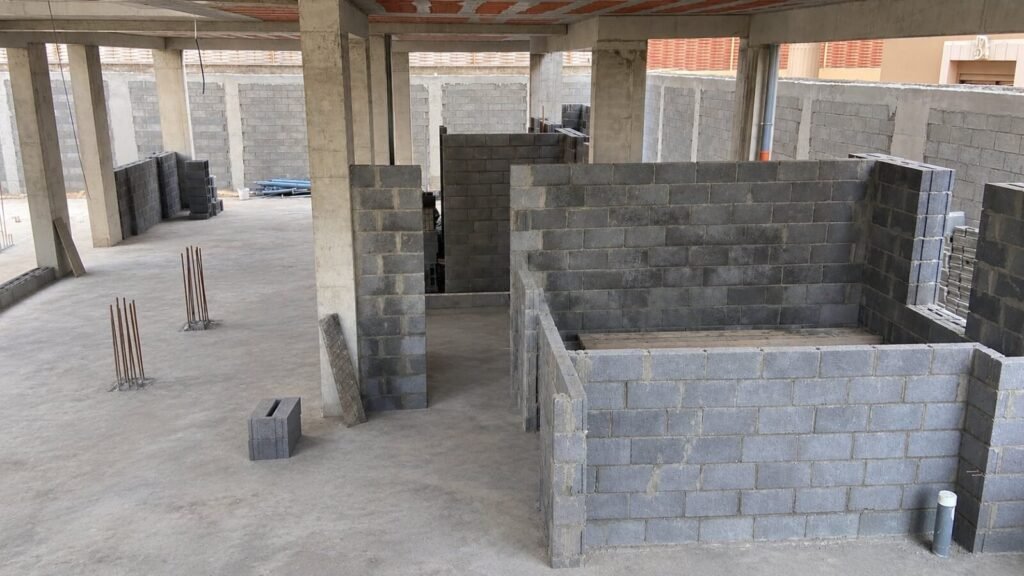
How we lay the walls
- Full mortar joints, with no gaps.
- Joints staggered from one course to the next.
- We check every course with a level and a string line.
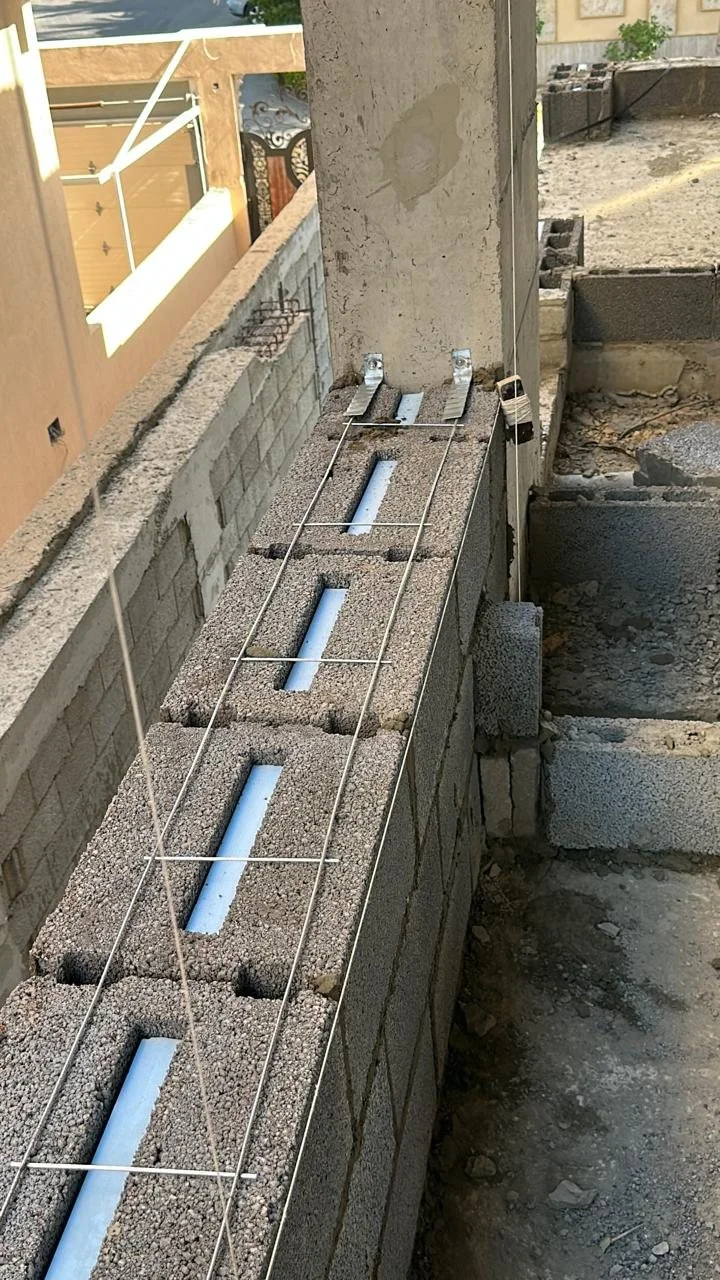
- Walls tie into the columns.
- Steel reinforcement goes in the joints every third course.
Doors and windows
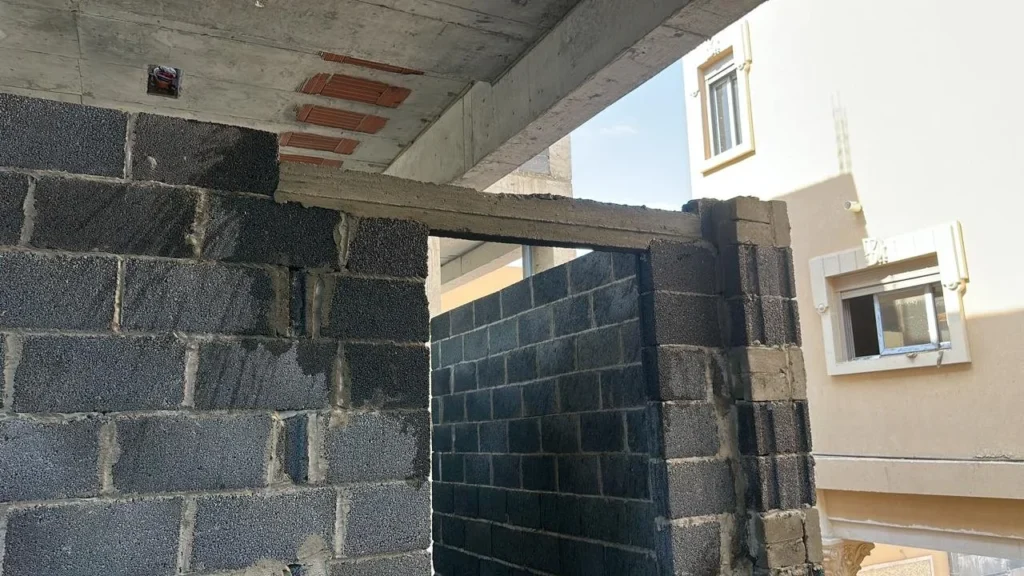
Every door and window opening gets a lintel. However, over large openings that need a deeper lintel, we cast it in place rather than using a ready-made one.
Checks as the walls go up
We check walls for plumb, level and line as they rise. Every Falcon project has a dedicated site engineer, who signs off each stage, followed by the client’s consultant if there is one, before the next trade starts.
Shortcuts to watch for on cheaper jobs
- Mortar joints only half filled.
- Walls not tied into the columns.
- No steel in the joints every few courses.
- Ready-made lintels over large openings where a deeper cast lintel is needed.
Eventually, the result shows: lintels sagging over large openings.
Questions to ask any contractor
- Which blocks will you use?
- Is there steel in the joints, and how often?
- How are the walls tied to the columns?
- What goes over the large openings?
Building a villa in Jeddah?
Send us your drawings and we’ll prepare a written, itemised quotation. See also the Falcon Standard for how we handle the other stages of the build.