
Waterproofing is one of the few jobs in a villa you can’t see once it’s finished. It sits under backfill, screed and tiles, so a mistake only shows later, as damp walls or a leak into the room below, and fixing it means breaking finished work. This page sets out how Falcon waterproofs a villa, stage by stage, and what to check when you compare contractors.
Where we waterproof
- Foundations and basement walls, below ground.
- The roof.
- Bathrooms and kitchens (wet areas).
- Balconies.
- Water tanks.
- Swimming pool: we waterproof it together with the pool finishing and tiling as one system, so a single warranty covers the whole pool.
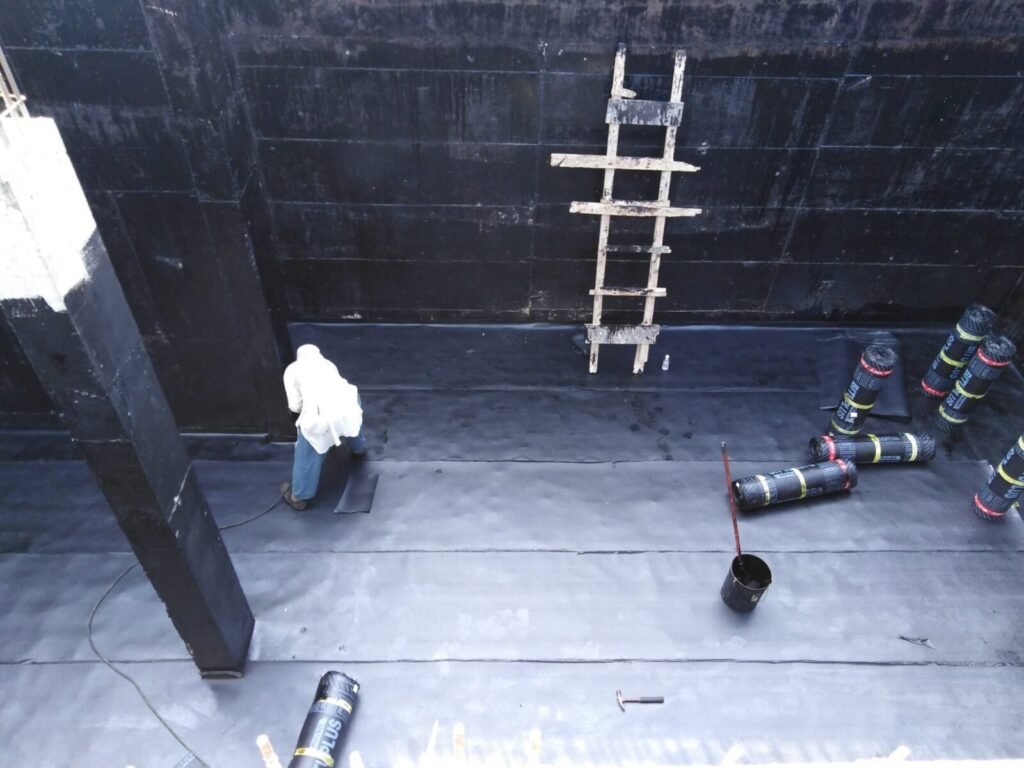
Foundations and basement walls
Below ground, the system depends on the site. Where the foundations sit below the groundwater level, we use a bitumen membrane. Where they don’t, the system follows the client’s requirements, but our preference is still a membrane.
Before any membrane goes down
First, the surface must be clean, dry and smooth. We also round inside corners with a mortar fillet, so the membrane bends over a curve instead of a sharp edge where it could crack or lift.
The roof, layer by layer
- Primer.
- Bitumen membrane in two layers.
- Flood test.
- Thermal insulation.
- Protection screed.
- Tiles or gravel.
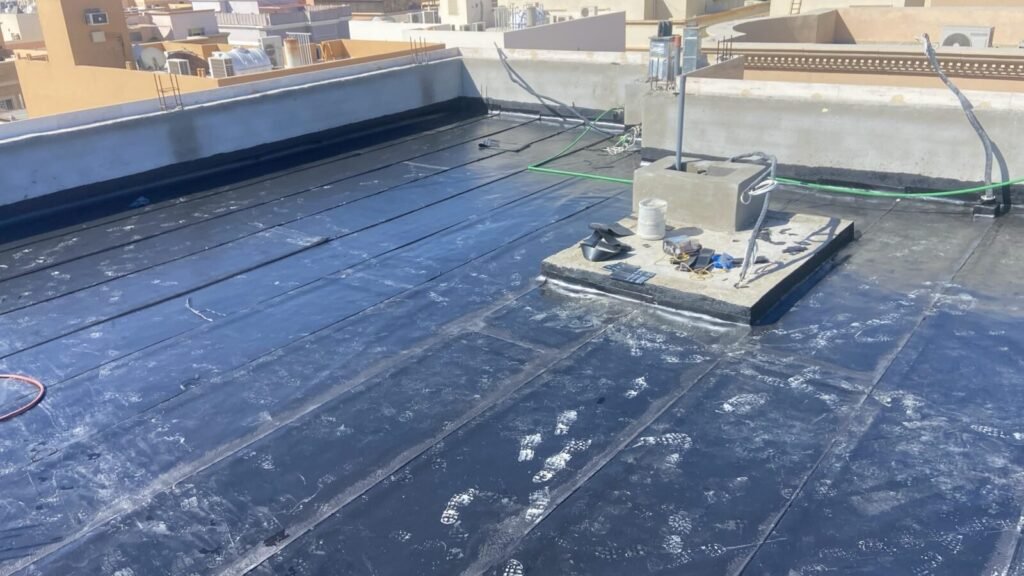
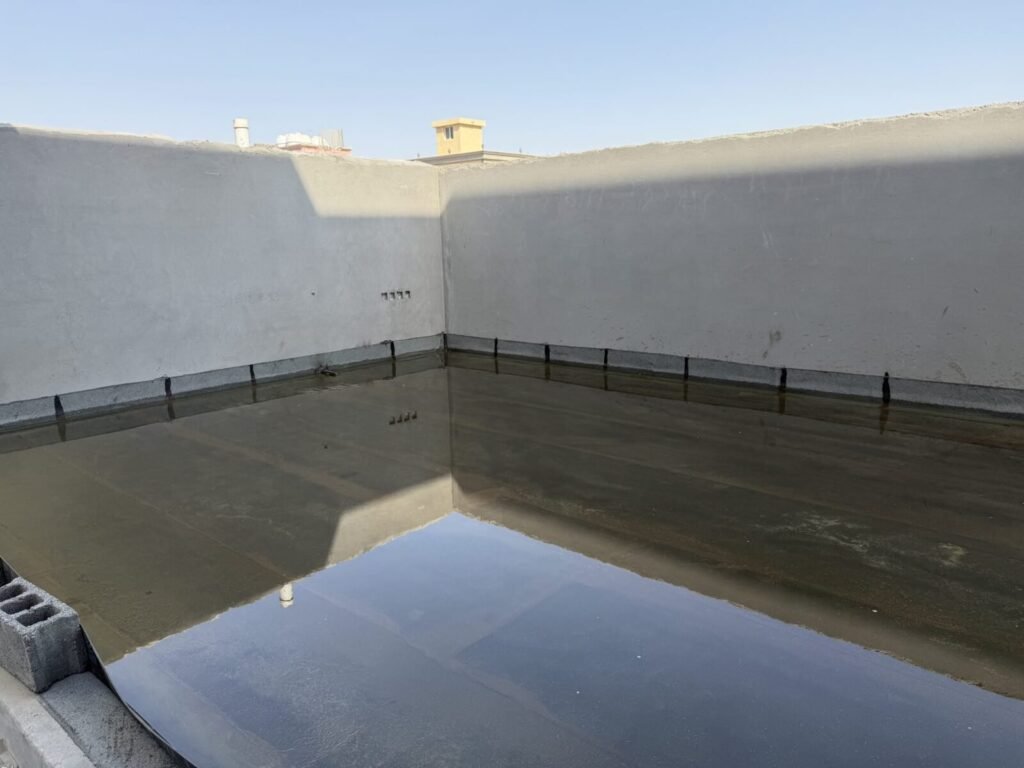
The flood test
Before anything covers the membrane, we flood the area with water, leave it for 48 hours, then check it for leaks. As a result, a leak found at this stage costs a patch. Found after the tiles go down, however, it means breaking them.
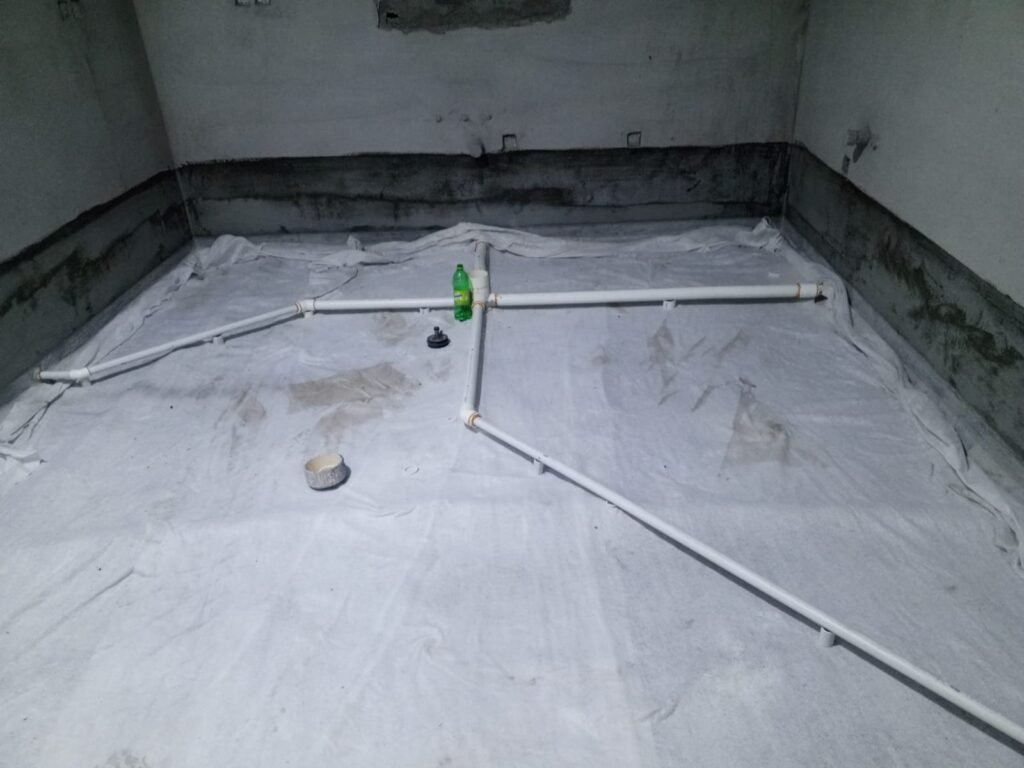
Bathrooms and kitchens
Wet areas get a cementitious or liquid membrane across the floor, turned up the walls to about 100 cm. Showers get the same treatment as the rest of the bathroom.
Who checks it
Every Falcon project has a dedicated site engineer. The site engineer inspects and signs off each stage, followed by the client’s consultant if there is one, before the next trade starts. The work follows the Saudi Building Code, the approved drawings and the manufacturer’s instructions.
Shortcuts to watch for on cheaper jobs
- A single membrane layer where two are needed.
- No flood test.
- Membrane not turned up the walls or around the drains.
Eventually, the result shows: damp walls, peeling paint, leaks into the floor below and corroded steel reinforcement.
Questions to ask any contractor
- How many membrane layers go on the roof?
- Will you flood test the roof and wet areas, and for how long?
- How high will you turn the membrane up the bathroom walls?
- What system goes on the foundations, and why?
- Who inspects each stage before anyone covers it?
Building a villa in Jeddah?
Send us your drawings and we’ll prepare a written, itemised quotation. See also the Falcon Standard for how we handle the other stages of the build.