
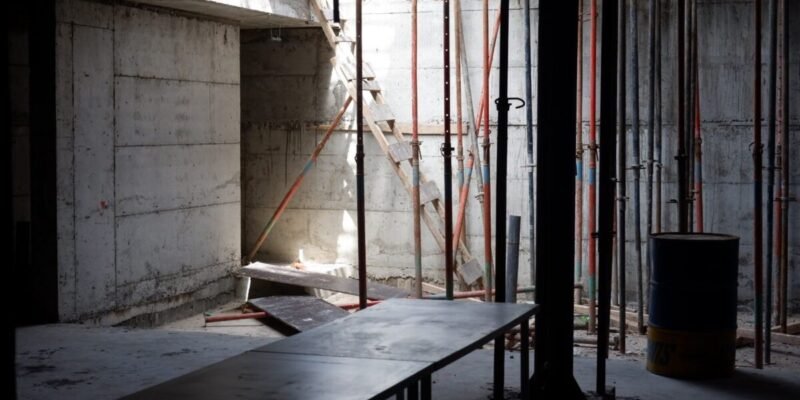
A general contractor takes full responsibility for delivering your villa — ideally with an in-house team that directly executes the core scopes: structural works, MEP, and finishing supervision. A subcontractor is a separate firm hired for one specific scope. Subcontracting is not a problem in itself; it becomes one when everything is outsourced without genuine supervision.
A Question Most Clients Never Think to Ask
When you sign a contract with a construction company, have you ever wondered: who will actually do the work? Will it be the contractor’s own skilled team — or will the work be passed to a chain of subcontractors with varying standards and no direct accountability to you?
What is a General Contractor?
A general contractor holds full responsibility for delivering the project. In the strongest model, this means having an internal team that directly executes core scopes: structural works, MEP, and finishing supervision.
What is a Subcontractor?
A subcontractor is a separate entity engaged by the general contractor to execute a specific scope. In itself, subcontracting is not a problem. It becomes one when everything is outsourced to unvetted crews with no genuine supervision or quality standard.
What Happens When Everything is Subcontracted?
- Inconsistent quality across different scopes of work
- Poor coordination between systems — electrical conduits clashing with plumbing runs
- Unclear accountability when a defect appears
- Difficulty enforcing actual material specifications on site
How Can You Tell if a Contractor Has Real Delivery Capability?
Ask directly: which scopes does your internal team execute? Do you have full-time site engineers assigned to every active project? Can you show documentation of completed projects? Visiting an active construction site is more revealing than any portfolio — a well-organized, well-supervised site is the clearest indicator of a capable company.
The Falcon Model
At Falcon, we maintain a dedicated in-house engineering team that directly supervises all execution phases. Our quality standard is consistent across every project — it does not change from site to site because the people implementing it are our own.
Frequently Asked Questions
A general contractor holds full responsibility for delivering the project. A subcontractor is a separate entity engaged by the general contractor to execute a specific scope.
Not in itself. Subcontracting becomes a problem when everything is outsourced to unvetted crews with no genuine supervision or quality standard.
Quality becomes inconsistent across different scopes of work, coordination between systems suffers (for example, electrical conduits clashing with plumbing runs), accountability is unclear when a defect appears, and actual material specifications are difficult to enforce on site.
Ask which scopes the internal team executes, whether full-time site engineers are assigned to every active project, and for documentation of completed projects. Visiting an active construction site is more revealing than any portfolio.
Want to learn more about how Falcon delivers projects in-house? We welcome you to visit one of our active sites.