
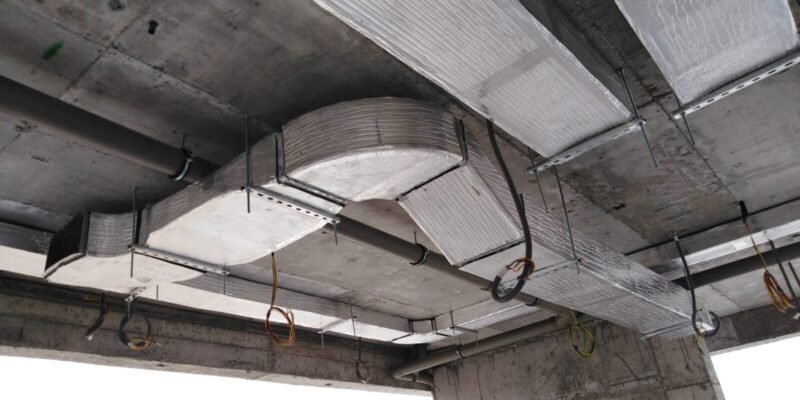
What is MEP and Why Does It Define the Quality of Your Villa?

MEP stands for Mechanical, Electrical, and Plumbing — the circulatory system of your villa, determining comfort, safety, and reliability long after finishes are complete. At Falcon, MEP is coordinated in-house with structural and architectural teams from the design stage, with inspection checklists at every milestone before systems are concealed.

MEP stands for Mechanical, Electrical, and Plumbing — the circulatory system of your villa. It is one of the areas where the gap between an average contractor and an excellent one is most visible, and most costly to fix after the fact. If you are still early in the process, our guide to the stages of building a villa in Jeddah covers where MEP fits into the overall timeline.

The Systems Behind the Walls

Every luxury villa depends on three coordinated systems working together long after the finishes are complete. Get MEP right, and the villa simply works — quiet, efficient, and reliable for decades. Get it wrong, and even the finest marble and joinery can’t hide the problems underneath.

Mechanical: Climate and Ventilation

In Jeddah’s climate, HVAC design is a necessity. A properly designed mechanical system includes zoned air conditioning, adequate fresh air ventilation, kitchen and bathroom exhaust, and central filtration where required. Poorly designed HVAC leads to uneven cooling, condensation problems, noisy units, and high electricity bills.

Electrical: Safety, Capacity, and Intelligence

A luxury villa’s electrical system must be designed for future capacity. This means planning for smart home integration, sufficient circuit distribution, proper earthing and protection systems, and backup power provisions. Electrical deficiencies range from inconvenient (tripping breakers) to dangerous (fire risk from undersized wiring).

Plumbing: Where Quality is Measured in Decades

Plumbing failures in villas are disproportionately expensive to fix after finishes are complete. Water leaks behind marble walls or under stone floors require full demolition to repair. This is why material quality, connection quality, and pressure testing before finishing are non-negotiable. A professional MEP contractor pressure-tests every circuit before walls are closed.

Coordinated MEP: The Falcon Standard

At Falcon, MEP is not subcontracted to a third party and managed separately. Our MEP systems are coordinated in-house with our structural and architectural teams from the design stage — eliminating the most common cause of MEP failure: clashes between systems designed independently and installed without coordination.

We maintain inspection checklists at every MEP milestone — rough-in, pre-cover inspection, and commissioning — so that every system is tested and documented before it is concealed.

If you are planning a villa, ask your contractor how they handle MEP coordination. The answer will tell you a great deal about how your project will be managed.

Frequently Asked Questions

What does MEP stand for and why does it matter in a villa?

MEP stands for Mechanical, Electrical, and Plumbing — the circulatory system of a villa. It determines comfort, safety, and long-term reliability long after the finishes are complete, and problems in these systems are far more expensive to fix once walls are closed.

What does a properly designed electrical system in a luxury villa include?

A luxury villa’s electrical system must be designed for future capacity, planning for smart home integration, higher electrical loads, and safety margins from the start — not retrofitted after construction.

Why are plumbing failures so costly to fix in a finished villa?

Water leaks behind marble walls or under stone floors require full demolition to repair, since plumbing failures are usually discovered only after finishes are in place. This is why quality plumbing execution is measured in decades, not just at handover.

How does Falcon coordinate MEP systems?

At Falcon, MEP is not subcontracted to a third party and managed separately — it is coordinated in-house with the structural and architectural teams from the design stage, with inspection checklists at every milestone (rough-in, pre-cover, commissioning) so every system is tested and documented before it is concealed.

Ready to build a villa with MEP done right from day one? Request a quote from Falcon and let’s talk through your project.

Or explore Falcon’s luxury villa and residential construction service first.
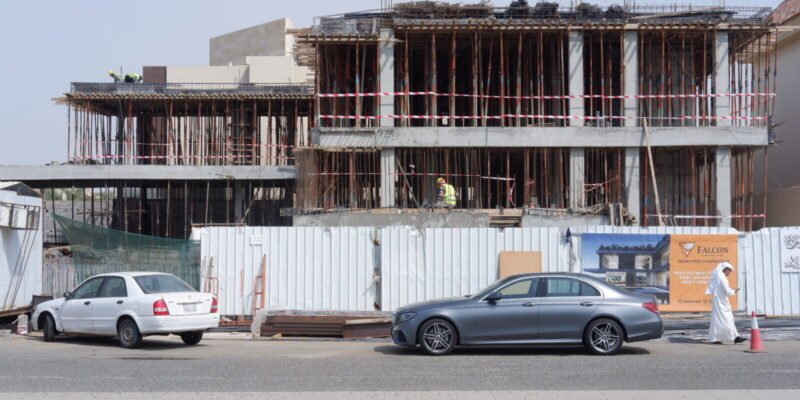
فيلا تحت الإنشاء في جدة تُظهر مرحلة الهيكل الإنشائي

Stages of Building a Villa in Jeddah: A Complete Guide

Building a luxury villa in Jeddah takes 14 to 18 months from permit issuance to handover, plus 4 to 12 weeks for design and permitting — roughly 15 to 21 months total. The process runs through seven stages: design and permitting, site preparation, foundations, structural frame, rough works, finishing, and final testing and handover.

Many villa owners enter a construction project without knowing what to expect at each stage. This ambiguity leads to misaligned expectations, friction with the contractor, and sometimes costly decisions made from uncertainty.

At Falcon Construction, we believe an informed client is a satisfied client. Here is a complete guide to the stages of villa construction in Jeddah.

If you are still working out the budget side, our guide to villa construction costs in Jeddah breaks down the numbers before you commit to a design.

Stage 1: Design and Permitting

Before any work begins on site, the design must be completed and official approvals obtained. This stage includes:

Expected duration: 4 to 12 weeks depending on project size and complexity.

Stage 2: Site Preparation and Excavation

  • Setting out the building boundaries and establishing levels
  • Excavation and backfill according to drawings
  • Removal of surplus soil from site
  • Formwork preparation for foundations

Stage 3: Foundations

Foundations are the first critical structural element — and no compromise is acceptable here. At Falcon, we use accredited soil testing laboratories to ensure the foundation type is appropriate for the specific ground conditions at your villa site.

  • Pouring of plain and reinforced concrete
  • Installation of reinforcement steel per structural specifications
  • Concrete compression testing

Stage 4: Structural Frame

This phase involves construction of columns, beams, and slabs for each floor from ground level up to the roof.

Expected duration: 3 to 8 months depending on number of floors and design complexity.

Stage 5: Internal Construction — Rough Works

  • Construction of internal and external walls
  • Thermal and waterproofing insulation
  • Running pipes and electrical conduits inside walls
  • Plastering and render works

Stage 6: Finishing Works

  • Installation of floor finishes — marble, stone, ceramic
  • Installation of doors and windows
  • Interior painting and decorative finishes
  • Kitchen and built-in wardrobes installation
  • Final electrical works — switches, lighting, distribution boards
  • Final plumbing works — basins, fixtures, sanitary ware

Stage 7: Testing and Handover

Before final handover, Falcon conducts comprehensive testing of all systems: electrical, plumbing, HVAC, fire alarm and suppression. This is followed by a joint inspection walk-through with the client before the completion certificate is issued.

How Long Does the Whole Build Take?

For a luxury villa in Jeddah, expect 14 to 18 months from the date the building permit is issued to final handover. Add another 4 to 12 weeks before that for design and permitting, which puts the realistic total at roughly 15 to 21 months from the day you start design work.

That range moves with the specification level. A villa with a basement, pool, extensive landscaping, or full smart home integration sits at the upper end. Delays most often come from three sources: late client decisions on finishes, design changes after structural work has started, and material lead times on imported items.

The single most effective way to protect your timeline is to finalise finishing selections before the structural frame is complete. Every decision deferred past that point has a compounding effect on the schedule.

Villa Construction Process: Step by Step

Falcon’s villa construction process runs through seven stages, from design and permitting to final handover:

  1. Design and Permitting

    Complete the architectural and structural drawings, design the MEP systems (mechanical, electrical, plumbing), obtain the building permit from Jeddah Municipality (Amanah), and hold a design review with the supervising engineer. Expected duration: 4 to 12 weeks depending on project size and complexity.

  2. Site Preparation and Excavation

    Set out the building boundaries and establish levels, excavate and backfill according to the drawings, remove surplus soil from the site, and prepare formwork for the foundations.

  3. Foundations

    Pour plain and reinforced concrete, install reinforcement steel per the structural specifications, and carry out concrete compression testing. Falcon uses accredited soil testing laboratories to confirm the foundation type suits the site’s ground conditions.

  4. Structural Frame

    Construct the columns, beams, and slabs for each floor from ground level up to the roof. Expected duration: 3 to 8 months depending on the number of floors and design complexity.

  5. Internal Construction — Rough Works

    Build the internal and external walls, apply thermal and waterproofing insulation, run pipes and electrical conduits inside the walls, and complete plastering and render works.

  6. Finishing Works

    Install floor finishes (marble, stone, ceramic), doors and windows, complete interior painting and decorative finishes, install the kitchen and built-in wardrobes, and finish the electrical (switches, lighting, distribution boards) and plumbing works (basins, fixtures, sanitary ware).

  7. Testing and Handover

    Falcon conducts comprehensive testing of all systems — electrical, plumbing, HVAC, fire alarm and suppression — followed by a joint inspection walk-through with the client before the completion certificate is issued.

Frequently Asked Questions

How long does it take to build a villa in Jeddah?

For a luxury villa in Jeddah, expect 14 to 18 months from the date the building permit is issued to final handover. Adding 4 to 12 weeks for design and permitting beforehand puts the realistic total at roughly 15 to 21 months from the start of design to handover.

What causes delays in villa construction timelines?

Delays most often come from three sources: late client decisions on finishes, design changes after construction has started, and specification upgrades mid-build. The single most effective way to protect the timeline is to finalize finishing selections before the structural frame is complete.

What are the main stages of building a villa?

Villa construction moves through seven stages: design and permitting, site preparation and excavation, foundations, structural frame, internal rough works, finishing works, and testing and handover — each stage depends on the one before it being fully complete.

What increases villa construction time in Jeddah?

Specification level has the biggest effect — a villa with a basement, pool, extensive landscaping, or full smart home integration sits at the upper end of the timeline range, since these elements add coordination and construction complexity across multiple stages.

Are you in the planning stage for your villa? Contact the Falcon team for a detailed project timeline tailored to your specific scope.

Curious what a Falcon-built villa looks like? See our luxury villa and residential construction service.